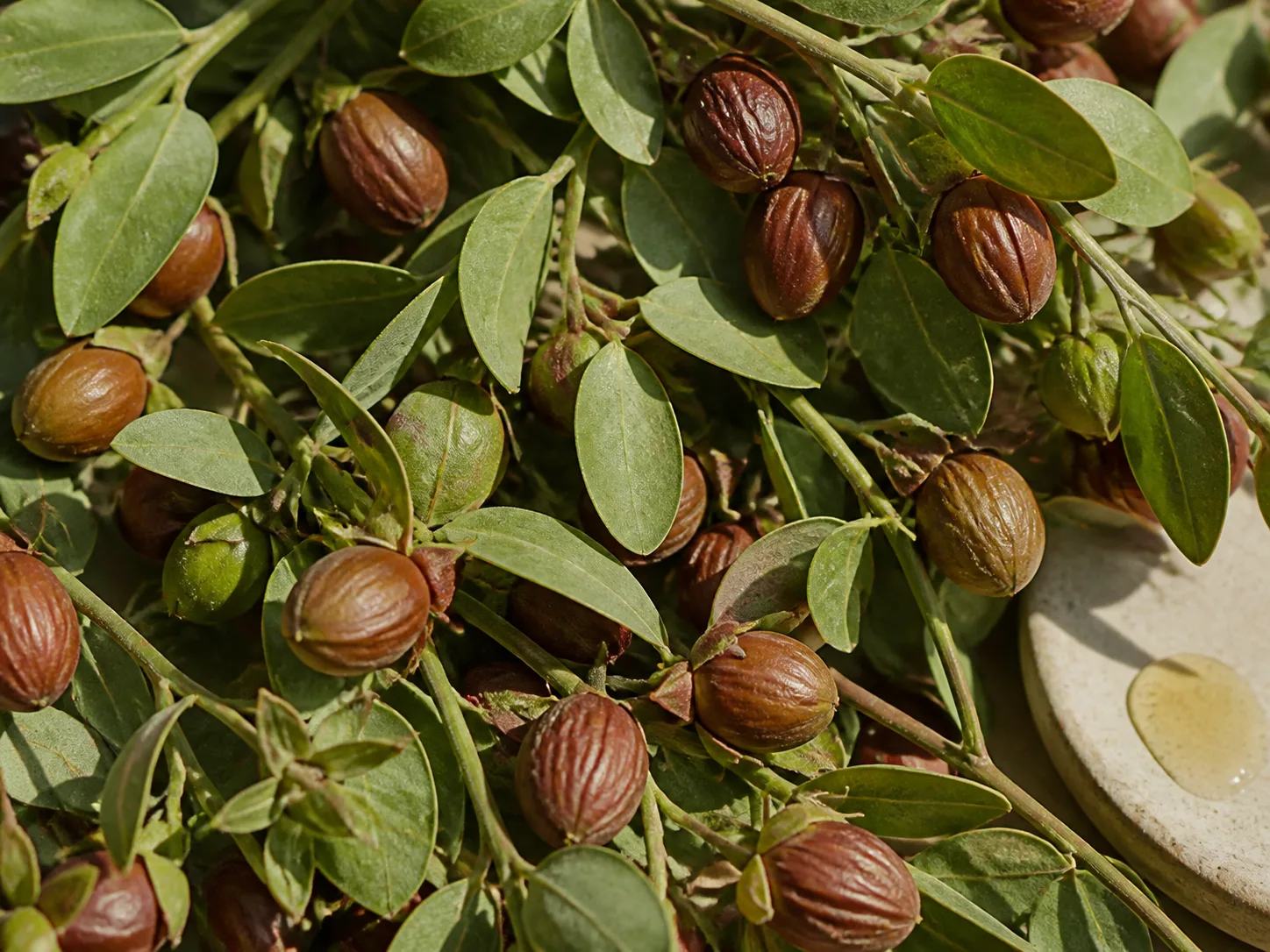
What Jojoba Seed Oil actually is
Jojoba Seed Oil appears on an ingredient list as Simmondsia Chinensis (Jojoba) Seed Oil. Cosmetic references describe it as the nonvolatile material pressed from jojoba seeds. Shorter labels such as jojoba oil are common, but the full INCI helps distinguish the seed oil from jojoba esters, hydrolyzed derivatives, and botanical extracts.
Despite the word oil, its composition differs from most plant oils. Jojoba is dominated by long-chain wax esters rather than triglycerides. This helps explain its smooth slip and thin satin film. It does not guarantee a light feel in every product: refining, dose, and the other emollients in a formula can shift a product from light to greasy.
The sebum comparison is incomplete
Marketing often says jojoba “matches” human sebum. Both contain wax esters, but their detailed compositions and proportions are not identical. A structural resemblance does not prove that skin mistakes the product for its own sebum or responds by producing less oil.
There is no strong controlled human evidence showing that Jojoba Seed Oil alone reliably reduces sebum output. If oily skin is your concern, assess what happens several hours after application: shine, congestion, tightness, and makeup wear are more useful than the idea that one oil balances another.
How jojoba oil softens the skin surface
In cosmetics, Jojoba Seed Oil mainly acts as an emollient. It softens rough surface cells and contributes a lipid film that can reduce the dry feel associated with water loss. It is not primarily a humectant that attracts water, so it solves a different part of dryness than glycerin or hyaluronic acid.
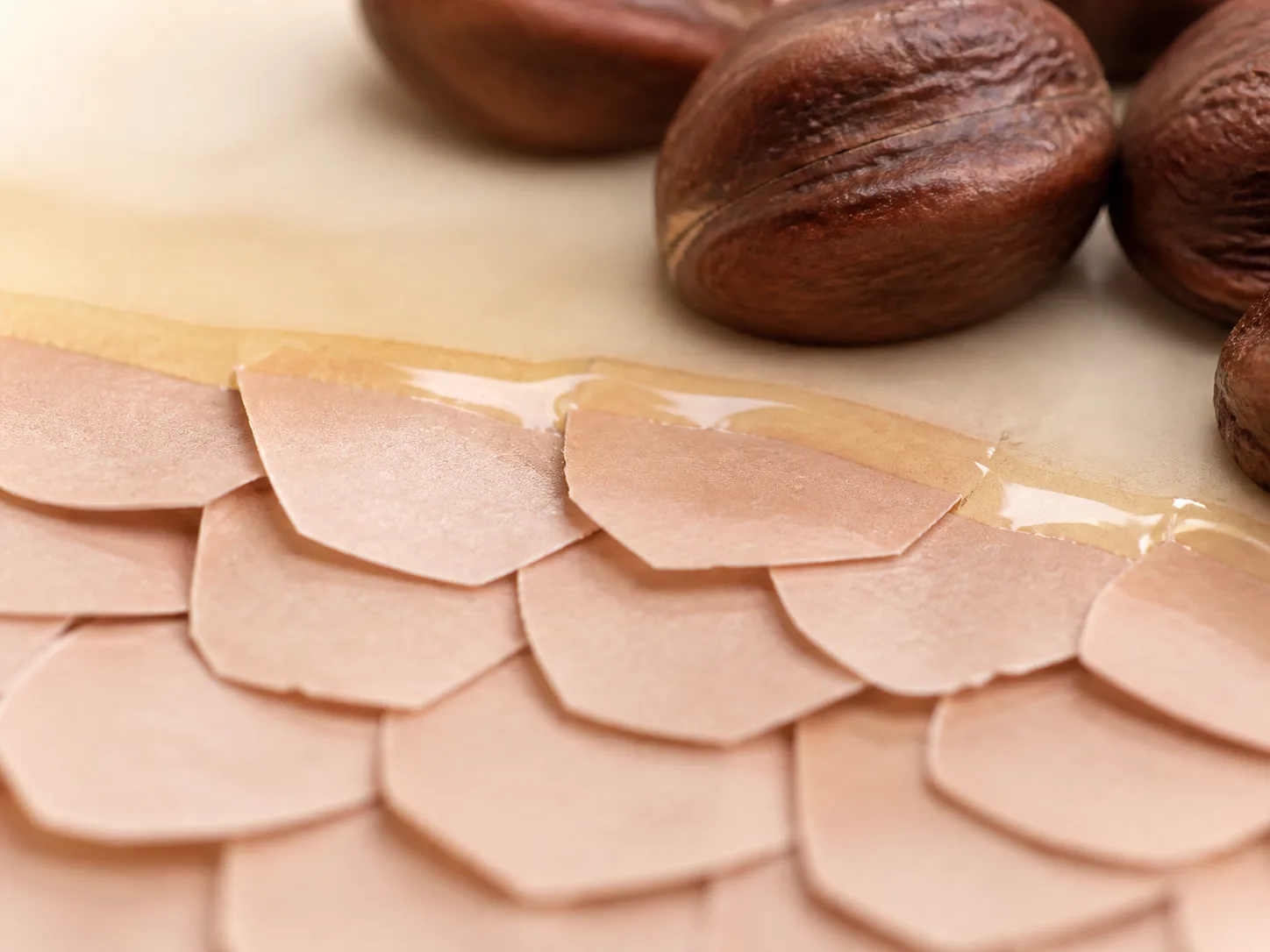
This is why pure oil can leave a glossy surface while deeper tightness remains. Apply a water-containing lotion or cream first, then press one or two drops over the driest areas if needed. A cream that already contains jojoba may provide enough emollience without a separate oil step.
What the acne-mask study did and did not show
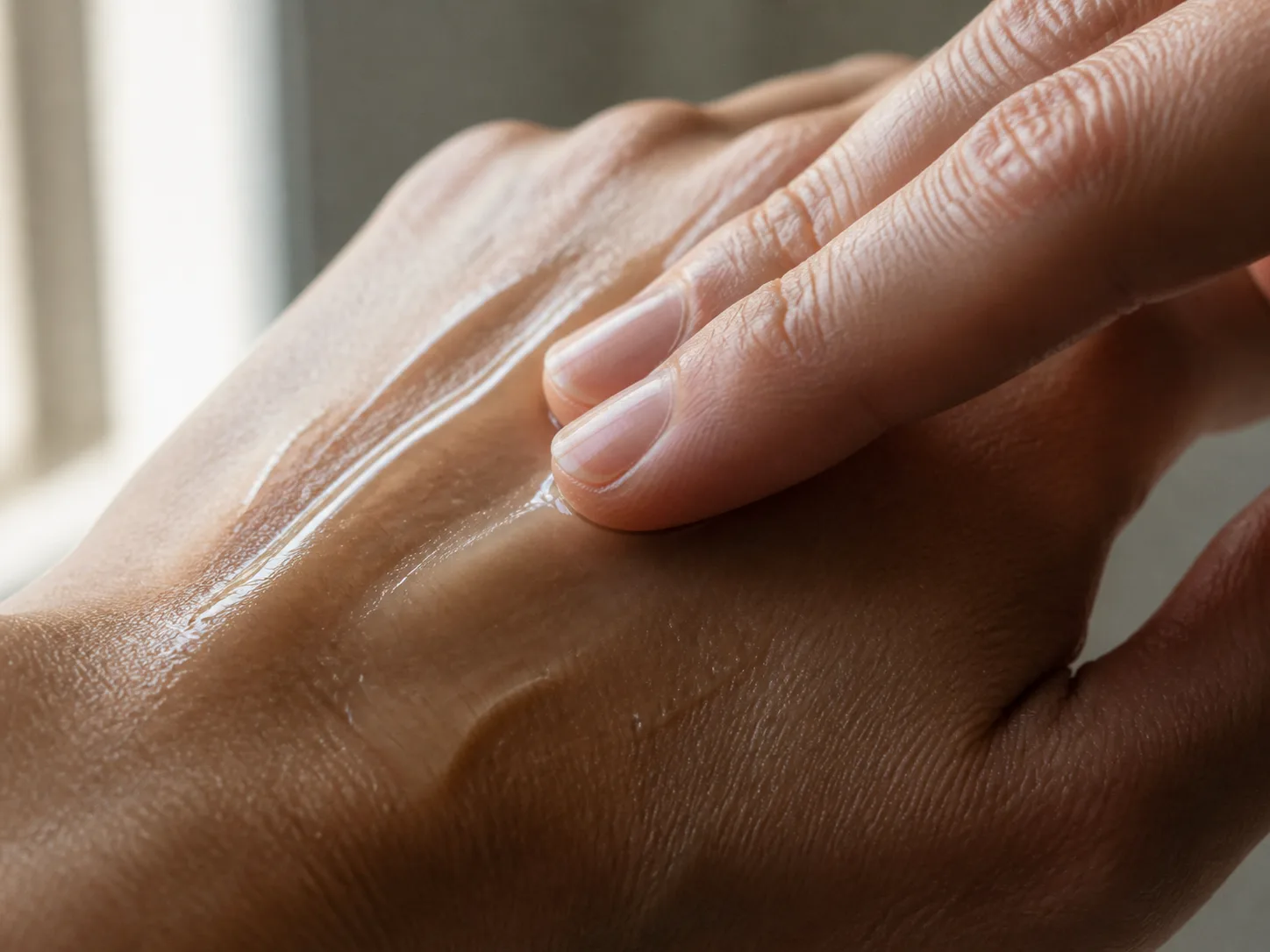
An observational study followed people with mild acne lesions who used a clay-and-jojoba-oil mask two or three times weekly for six weeks. Lesion counts declined. The study had no comparison group and tested clay and jojoba oil together.
Clay absorption, cleansing, other routine changes, and natural fluctuation could all contribute. The study therefore cannot establish Jojoba Seed Oil as an acne treatment. Painful, scarring, or worsening acne should not be managed by repeatedly adding oils; it deserves appropriate medical care.
Pure oil versus a cream
Korean product pages show both single-ingredient facial oils and creams in which jojoba is one component. A pure oil offers a short ingredient list and precise dose control, but it supplies no water. One extra drop can noticeably increase shine or interfere with sunscreen and makeup.
A cream combines water, humectants, emulsifiers, and multiple emollients, so it can address hydration and surface softness together. The tradeoff is that you cannot attribute its feel to jojoba alone. Start with a cream for broad dryness, add a tiny amount of oil only to dry zones, and use the residue on hair ends rather than pouring out a separate dose.
Trying one new product at a time
Begin at night on the jawline or one side of the face. Apply toner or serum and moisturizer first, spread one drop between the palms, and press rather than rub. Do not begin a new exfoliant, retinoid, and oil in the same week if you want to identify the cause of a reaction.
Check next-morning tightness, shine, small clogged bumps, and itch. A pleasing immediate glow is not the same as lasting comfort. If the finish feels heavy, halve the amount and check whether your cream already contains substantial oils before deciding that the ingredient itself is unsuitable.
Safety and storage
Cosmetic Ingredient Review material covers irritation, sensitization, and use context for jojoba-derived ingredients. That supports ordinary cosmetic use; it does not promise that no individual can react. Stop if swelling, hives, persistent burning, or continuing itch develops.
Light, heat, and repeated air exposure can change plant-derived materials over time. Do not keep using an oil whose odor shifts toward stale nuts or paint, or whose color and texture change markedly. Store it upright in a cool, dark place and avoid touching the dropper to skin.
Sources used
- 대한화장품협회 성분사전 - 호호바씨오일exact INCI, Korean standard name and pressed-seed origin
- CIR safety assessment supplement - jojoba-derived ingredientscosmetic irritation, sensitization and safety context
- Jojoba Oil: An Updated Comprehensive Reviewwax-ester composition, topical uses and what the published studies actually tested
- Clay jojoba oil facial mask for lesioned skin and mild acnesix-week observational finished-mask evidence and attribution limit
- 시드물 호호바 오일 제품 정보Korean leave-on product format, concentration and storage context