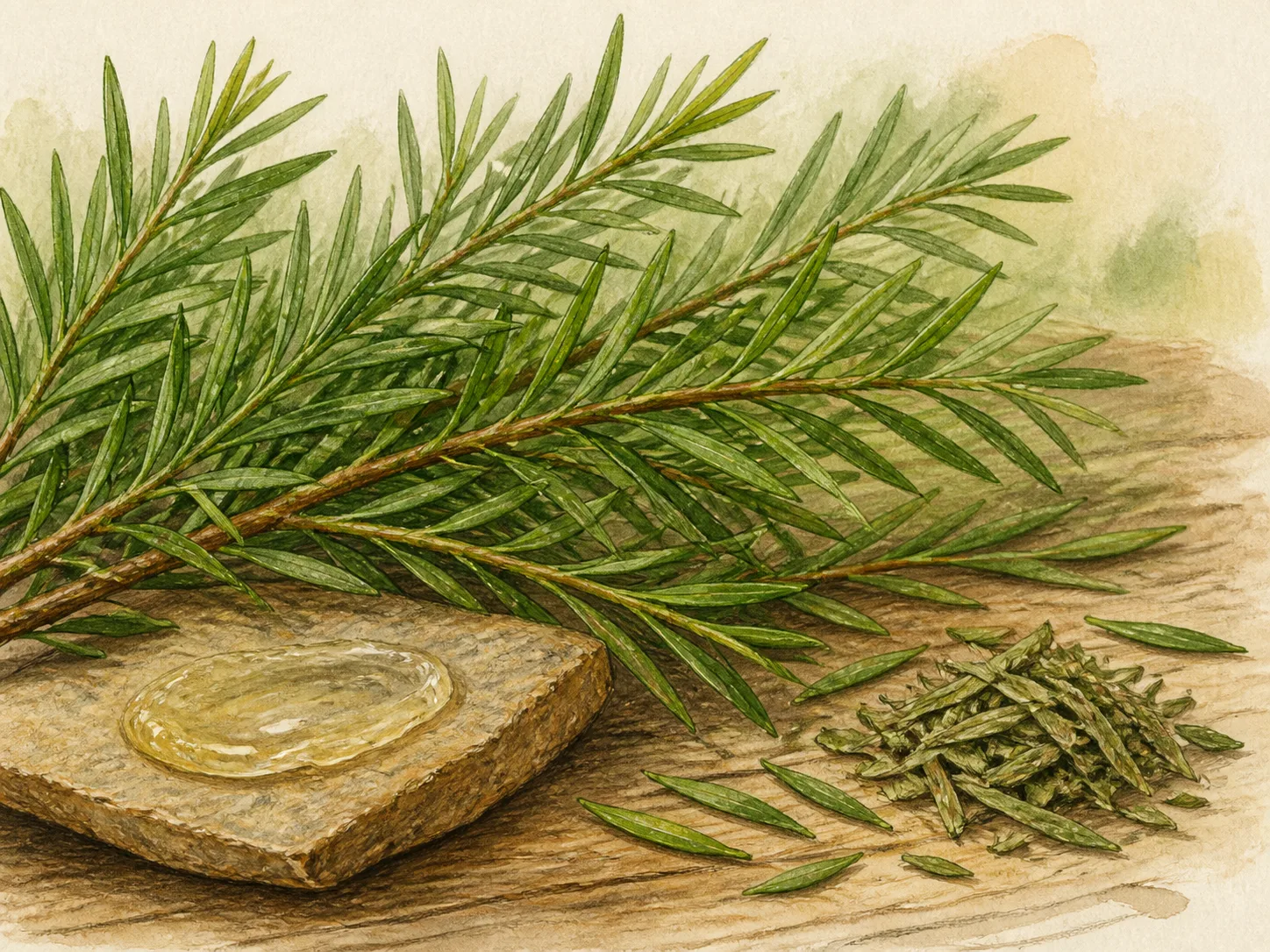
What Tea Tree Extract does for skin
Melaleuca Alternifolia (Tea Tree) Extract is defined by the Cosmetic Ingredient Review as an extract of the whole sapling and classified as an emollient skin conditioner. Its most direct cosmetic benefit is a softer, less rough-feeling skin surface. It can improve slip across dry flakes and make a hydrating formula feel more comfortable after cleansing.
That is different from killing acne-associated microbes. If a toner contains Tea Tree Extract but no Tea Tree Leaf Oil or terpinen-4-ol, look for a smoother surface feel rather than expecting a rapid fall in blemish count.
How surface softening works
A botanical extract is a mixture carried in water, glycols, or another extraction medium. When the extract and the formula’s emollient materials spread across the stratum corneum, they reduce friction around lifted corneocyte edges. The more even surface feels less scratchy.
Humectants such as glycerin or panthenol can add water-binding support, while light emollients slow the rapid return of dryness. Tea Tree Extract has not been shown to form a powerful moisture barrier on its own. Its role makes more sense as one part of that surface-conditioning system.
Tea tree oil uses a different set of mechanisms
If the ingredient list also names Melaleuca Alternifolia Leaf Oil or terpinen-4-ol, oil research becomes relevant. Lipophilic monoterpenes in tea tree oil insert into microbial lipid membranes. Experiments report increased membrane permeability, leakage of intracellular material, impaired membrane-bound respiration, and loss of the ion balance microbes need to maintain energy and growth.
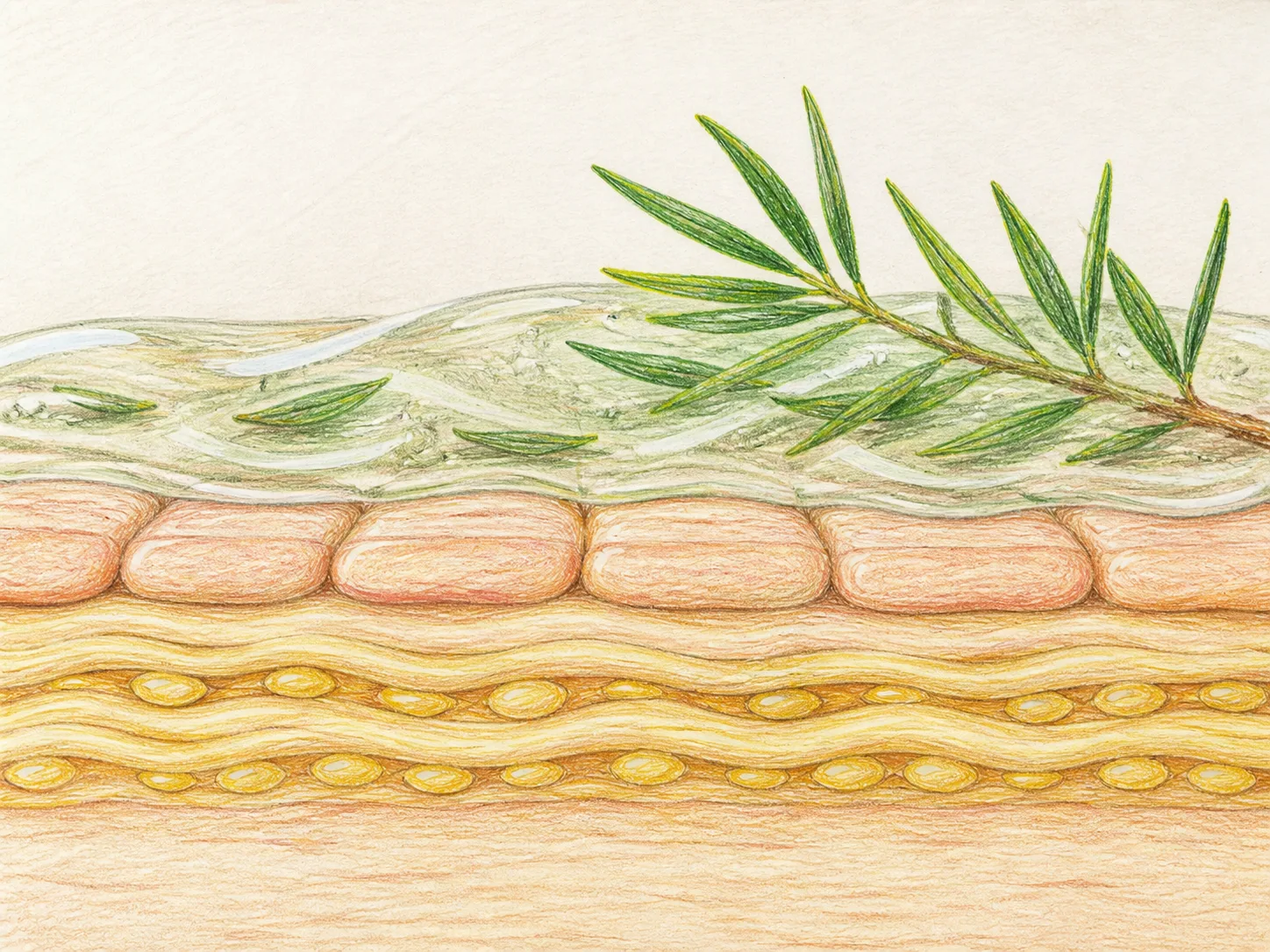
Terpinen-4-ol has also been tested in activated human monocytes. In vitro, it lowered production of inflammatory mediators including TNF-alpha, IL-1 beta, IL-8, and prostaglandin E2. This gives a plausible reason for using properly formulated tea tree oil in products aimed at red, inflamed-looking blemishes. It does not provide a percentage improvement for an ordinary face serum.
What human blemish evidence says
Small trials and systematic reviews of tea tree oil formulations report possible reductions in acne lesions. The evidence base remains limited, and concentrations, vehicles, and comparison products vary. A formula with a disclosed amount of tea tree oil may offer adjunctive support for mild blemishes, but the result cannot be transferred to every product that prints “tea tree” on the bottle.
Oil control claims also need care. A high-alcohol toner can feel instantly matte because it removes surface oil, then leave the cheeks tight. Volatile tea tree oil can feel fresh without proving a durable reduction in sebaceous-gland output. Check morning shine and afternoon tightness together.
Match each INCI to the benefit
Tea Tree Extract is the whole-sapling extract. Leaf Extract is a leaf solvent extract. Leaf Water is a distillate, and Leaf Oil is the essential oil. For surface comfort, look at the extract with glycerin, panthenol, betaine, or other moisturizers. For a blemish-focused claim, look for the oil or terpinen-4-ol, the disclosed concentration when available, and the rest of the active system.
Salicylic acid may be doing most of the pore-clearing work. Niacinamide may contribute to oil and barrier support. Centella components or panthenol may explain some of the comfort. These accompanying ingredients help explain why two tea tree products can feel and perform differently.
Why old oil can irritate
Air, light, and heat oxidize tea tree oil. Oxidation products can bind to skin proteins and trigger contact sensitization, which explains why old or poorly stored oil is riskier than a freshly made, well-preserved formula. Undiluted oil also delivers a much larger dose than a cosmetic serum.
Start a new leave-on product on a small area. Stop if burning, persistent itching, swelling, or a rash develops. A formula containing only the extract can still irritate because of fragrance, acids, or other essential oils, so check those ingredients when a reaction occurs.
Sources used
- Korea Cosmetic Association: Tea Tree ExtractWhole-plant extract identity and skin-conditioning function
- CIR Safety Assessment of Tea Tree-Derived IngredientsEmollient function, distinction from the essential oil, and safety
- Tea tree oil systematic reviewMicrobial membrane mechanism and limits of human evidence
- Terpinen-4-ol and inflammatory mediatorsInflammatory mediator production in activated human monocytes
- Determining the Antimicrobial Actions of Tea Tree OilMicrobial permeability, respiration, and homeostasis mechanism
- CIR Safety Assessment of Tea Tree-Derived IngredientsCosmetic use and safety assessment
- Tea Tree-Derived Ingredients Safety Assessment - PubMedPublished evidence and study scope
- Tea Tree Oil: Usefulness and Safety - NCCIHCosmetic use and safety assessment
- Tea Tree in Korean Skincare: Evidence and Formulation ContextIngredient characteristics and cosmetic use