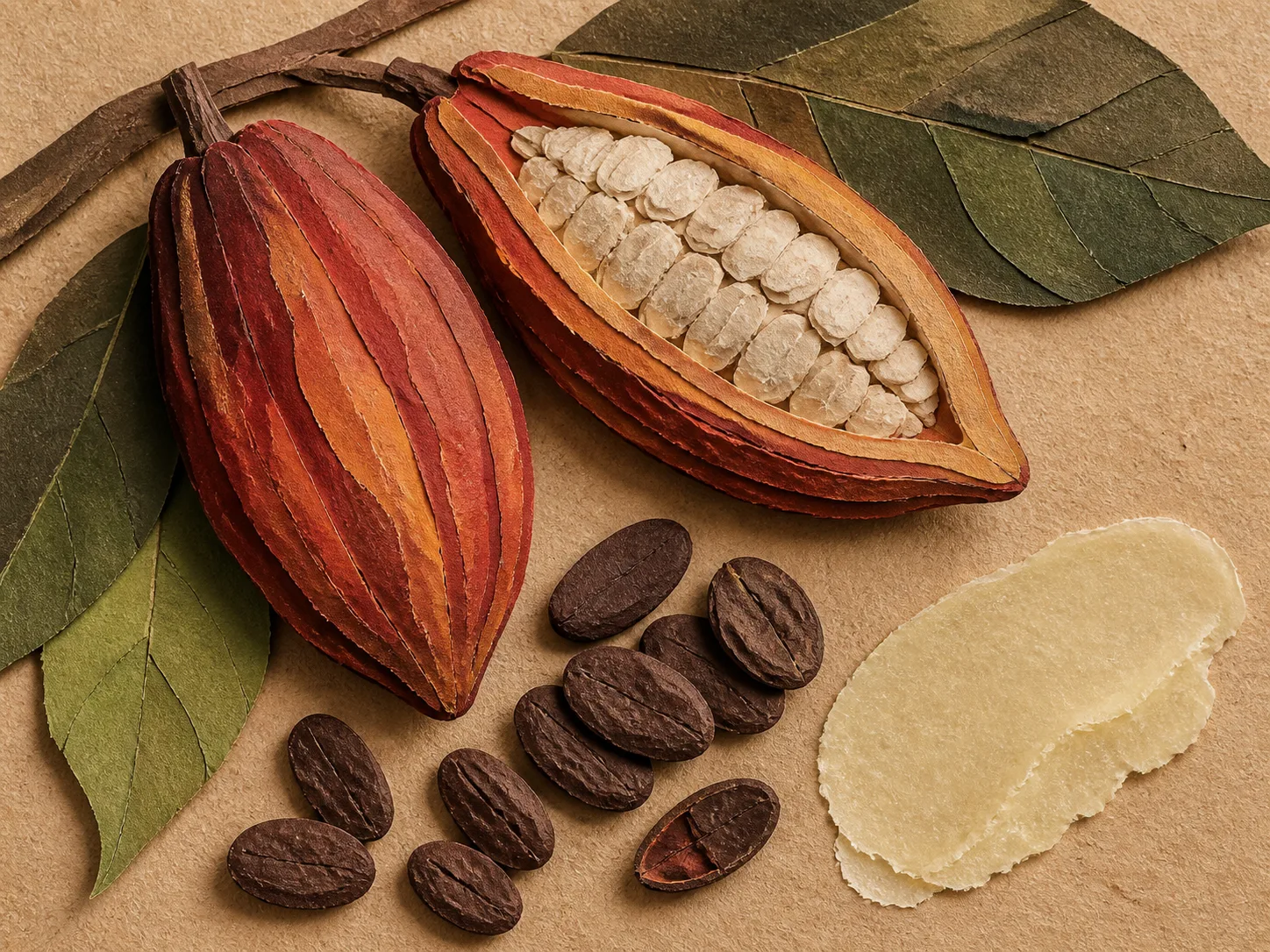
Cocoa Extract supports softness and antioxidant care
Cocoa Extract is used to make rough skin feel softer and add polyphenol-related antioxidant support to a serum or cream. It is most relevant in formulas for dry, dull-looking skin. It does not leave the rich, occlusive layer associated with Cocoa Butter, because the extract and the butter are different materials.
Theobroma Cacao (Cocoa) Extract, called cocoa extract in this guide, is a cosmetic ingredient obtained from the cocoa plant. It is easy to see the familiar word cocoa and assume that it behaves like cocoa butter. Cocoa seed butter, cocoa seed extract, cocoa shell powder, and cocoa extract are distinct INCI names, so the first useful step is to match the exact name on your own ingredient list.
Cocoa powder, extract, and butter are different materials
Cocoa polyphenols are studied for reducing reactive oxygen species. UV exposure can increase these reactive molecules, which damage lipids and proteins and activate inflammatory signals. Reducing those oxidative reactions helps explain the interest in cocoa for skin protection. Studies use different powders and extract fractions, so the effect of a cosmetic depends on the material and concentration actually used. Cocoa compounds and skin research
A small topical study that observed cocoa polyphenols in the outer skin layer is useful background, but it used a defined test preparation and application method. In daily skincare, a more meaningful question is whether a formula remains comfortable over repeated use without heaviness, stinging, or unexpected dryness.
Choosing a cocoa toner, serum, or cream
In a toner or serum, cocoa extract may sit among humectants and other botanical ingredients. If tightness after cleansing is your concern, look for glycerin, betaine, or hyaluronic-acid-related ingredients and check whether one layer followed by your familiar moisturizer stays comfortable. Fragrance, denatured alcohol, and strong exfoliating ingredients can still make a formula sting, even when an extract is present.
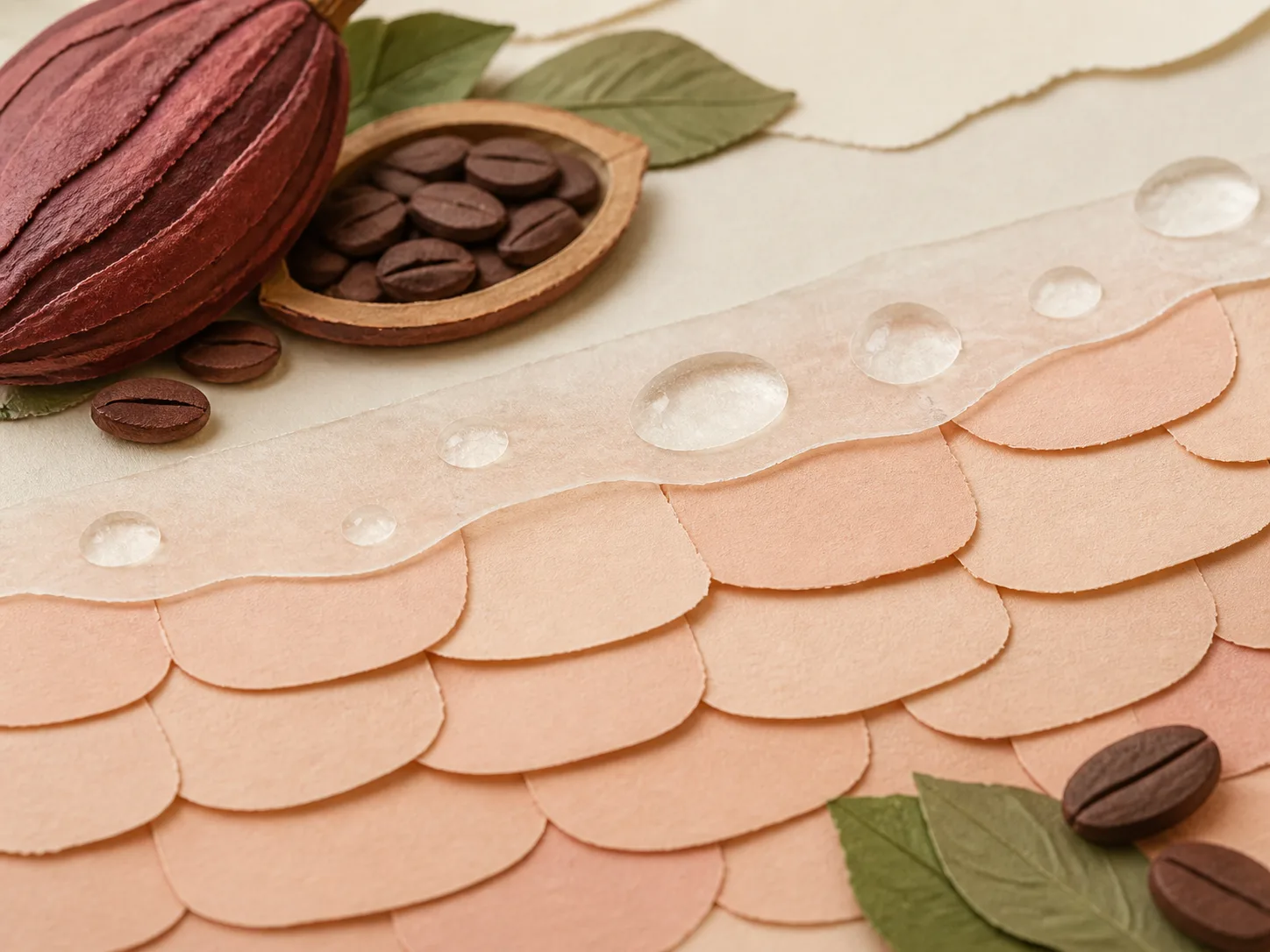
In a cream or balm, do not assume that a rich feel comes from cocoa extract. Oils, waxes, silicones, film formers, and how much you apply often have a larger effect. If you become shiny or feel congested easily, start with a thin layer and observe both heaviness and the return of tightness later in the day. If you are dry, a lighter hydration layer followed by a suitable emollient cream may make more sense than relying on one extract.
Fragrance and allergy checks
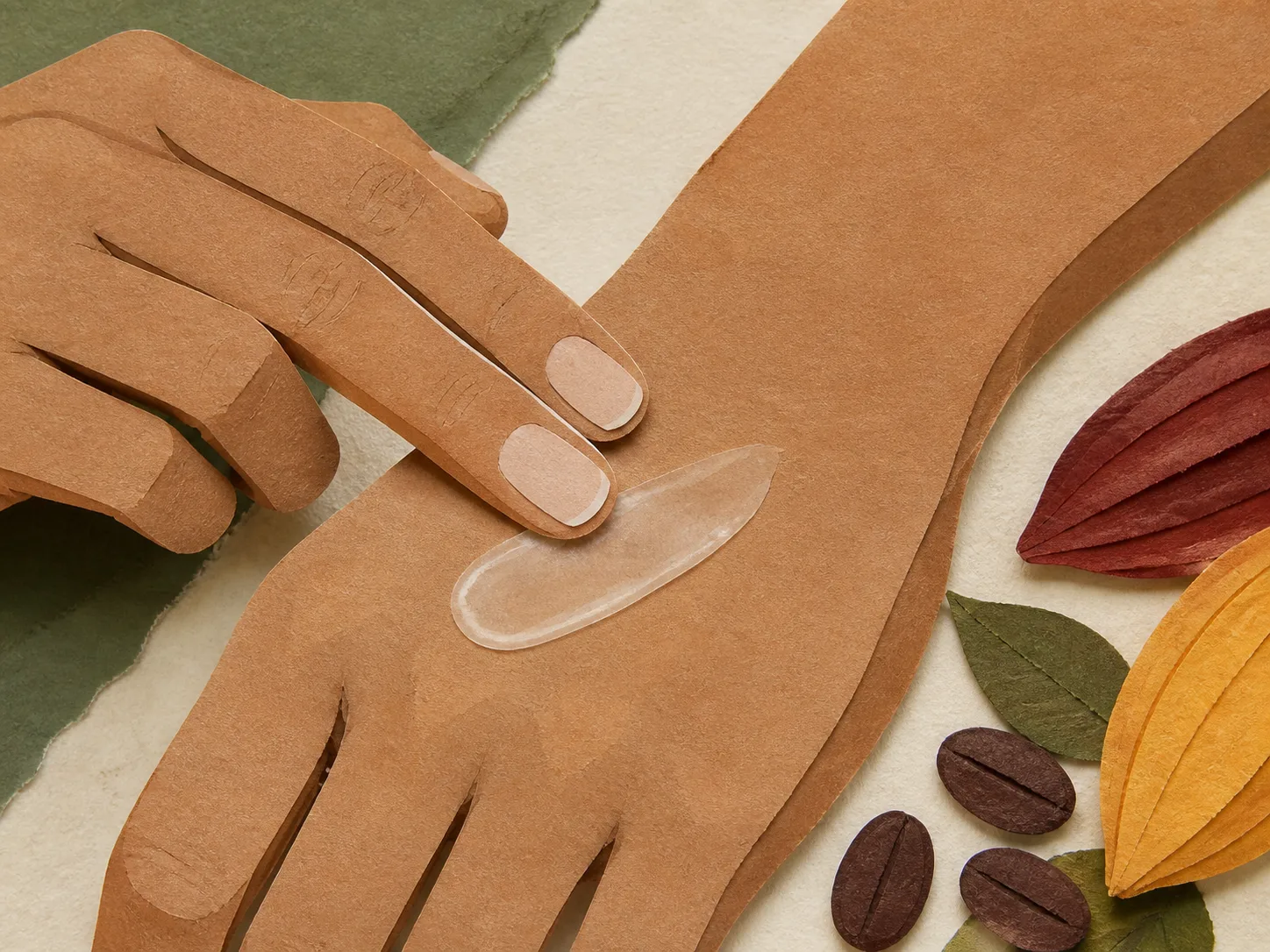
Cocoa extract and cocoa butter are different materials, so a claim about the comedogenicity of cocoa butter cannot simply be assigned to cocoa extract. Food allergy information is also not a direct prediction of a reaction to a finished cosmetic. Introduce one unfamiliar leave-on product at a time and try a limited area first so that an obvious reaction is easier to connect to a product change.
Stop using the product if burning, persistent itch, redness, or swelling develops. Consider the whole formula and other recent routine changes rather than blaming the word cocoa alone. Cosmetics do not treat skin disease or replace daily sun protection.
Sources used
- Korea Cosmetic Association ingredient referencecurrent Korean standard name, exact INCI, CAS number, origin and Korean cosmetic function
- Source from cosmetic-info.jpinternational identity cross-check, older naming and displayed cosmetic-function context
- Clarins Ingredient Library - Cocoa powder extractconsumer-facing explanation of cocoa powder extract and cosmetic-use context; brand benefit language is not treated as clinical proof
- Sensient Beauty - NATPURE XCO CHOCO CC864manufacturer technical material, declared INCI, phytochemical/format context and safety-test boundary for that named raw material
- Cocoa Bioactive Compounds: Significance and Potential for the Maintenance of Skin Healthreview of cocoa phytochemicals and topical/oral skin evidence, including limits on translating research to a finished cosmetic