Do you need to switch from retinol to retinal?
If retinol is already working for you, switching is optional. Both ingredients are used to improve fine lines, rough texture, and uneven tone. Retinal takes one fewer conversion step to reach retinoic acid, the form that acts on skin-cell receptors. That shorter pathway does not tell you how two finished products will compare on your face.
Frequent peeling is a reason to reduce use, not move to a stronger product. If your skin is comfortable and you want to explore another option for fine lines, a low-strength retinal formula may be worth considering. You do not have to progress from one ingredient to the other.
What happens beneath the peeling
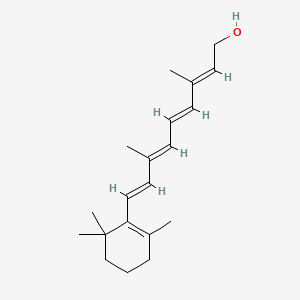
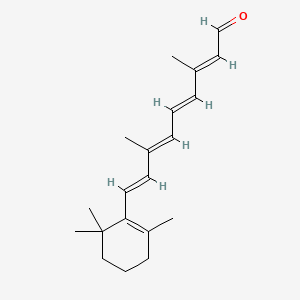
Skin converts retinol into retinal, then retinoic acid. Retinal needs only the second step. Retinoic acid acts through receptors that regulate gene activity involved in cell maturation and collagen production. This is different from an exfoliant that works mainly by helping surface cells shed.
More orderly cell turnover can improve rough texture and uneven pigmentation. Fine-line improvement also involves collagen production and the processes that break collagen down after UV exposure. These changes take time; the smooth feel of a freshly applied cream is not a measure of collagen growth.
Dry flakes, tightness, and stinging are unwanted effects. They can make fine lines look more obvious and cause makeup to catch on dry patches. Applying more product at that point can worsen irritation.
Why the percentages are not interchangeable
A 0.05% retinal product is not half the strength of 0.1% retinol. The ingredients differ, as do the formulas that protect and deliver them. Percentage comparisons are more useful within the same ingredient than across the two.
| Question | Retinol | Retinal |
|---|---|---|
| Conversion to retinoic acid | Two steps, through retinal | One step |
| Main cosmetic uses | Fine lines, texture, uneven tone | Fine lines, texture, uneven tone |
| What to check | Actual retinol amount and storage guidance | Actual retinal amount and delivery formula |
| What affects irritation | Dose, frequency, concentration, formula | Dose, frequency, concentration, formula |
An eight-week split-face trial in 23 Korean volunteers compared retinol with retinal carried in multilamellar vesicles. Both sides improved; the retinal formula performed better on several measurements. That supports the tested formulation, rather than a rule that every retinal product outperforms every retinol product.
Introduce a new formula slowly
Follow the product directions. Starting on two evenings a week gives you time to see how your skin responds. For a whole-face product, spread a pea-sized amount thinly and keep it away from eyelids unless the directions specifically allow that use. Moisturizer around the mouth and nose can protect areas where product tends to collect.
Apply to dry skin after cleansing. Moisturizer before or after can help with dryness. Avoid introducing a strong exfoliant or scrub at the same time: if irritation develops, you need to know which change caused it. Increase frequency gradually while your skin remains comfortable.
Persistent burning, redness, or a spreading itchy rash should not be dismissed as purging. Stop using the irritating product. Avoid topical retinoids during pregnancy or when planning pregnancy, and discuss suitable alternatives with a clinician. Use sunscreen during the day.
A stronger label is not always a better purchase
Light, oxygen, and heat can degrade retinoids. Opaque packaging and designs that limit air exposure help protect the contents. Encapsulation can improve stability or control release, but packaging and technology names alone cannot establish how well a formula holds up. Check storage directions and the period after opening.
A label saying “1% retinol complex” may describe the whole ingredient blend, not 1% pure retinol. Look for an explanation of the actual active concentration. If your current product is comfortable, compare fine lines or texture in consistent lighting over several weeks before deciding that it needs replacing. A change in packaging or a higher number is not, by itself, a reason to start again.
Sources used
- American Academy of Dermatology: Retinoid or retinol?Consumer distinction between retinoids and retinol, expected changes, and irritation management
- Use of Retinoids in Topical Antiaging Treatments: A Focused ReviewClinical anti-aging evidence and formulation limits for retinol and retinaldehyde
- Retinoid stability and degradation kinetics in commercial cosmeticsStability of commercial retinoids under light, oxygen, and storage conditions
- Retinaldehyde 0.1% and 0.05% creams: randomized controlled trialPhotoaging and tolerability results from 0.05% and 0.1% retinaldehyde creams
- Retinaldehyde versus retinol: randomized split-face studyDirect split-face comparison of retinaldehyde and retinol formulas in 23 Korean participants
- Cosmetic Ingredient Review: Retinol and retinyl estersCosmetic-use and safety assessment for retinol and retinyl esters
- PubChem: RetinolExact chemical identity and structure of retinol
- PubChem: RetinalExact chemical identity of retinal and its metabolic relationship to retinol
- Cleveland Clinic: RetinolMedically reviewed guidance on retinol for fine lines and clogged pores, gradual introduction, dryness, and irritation.