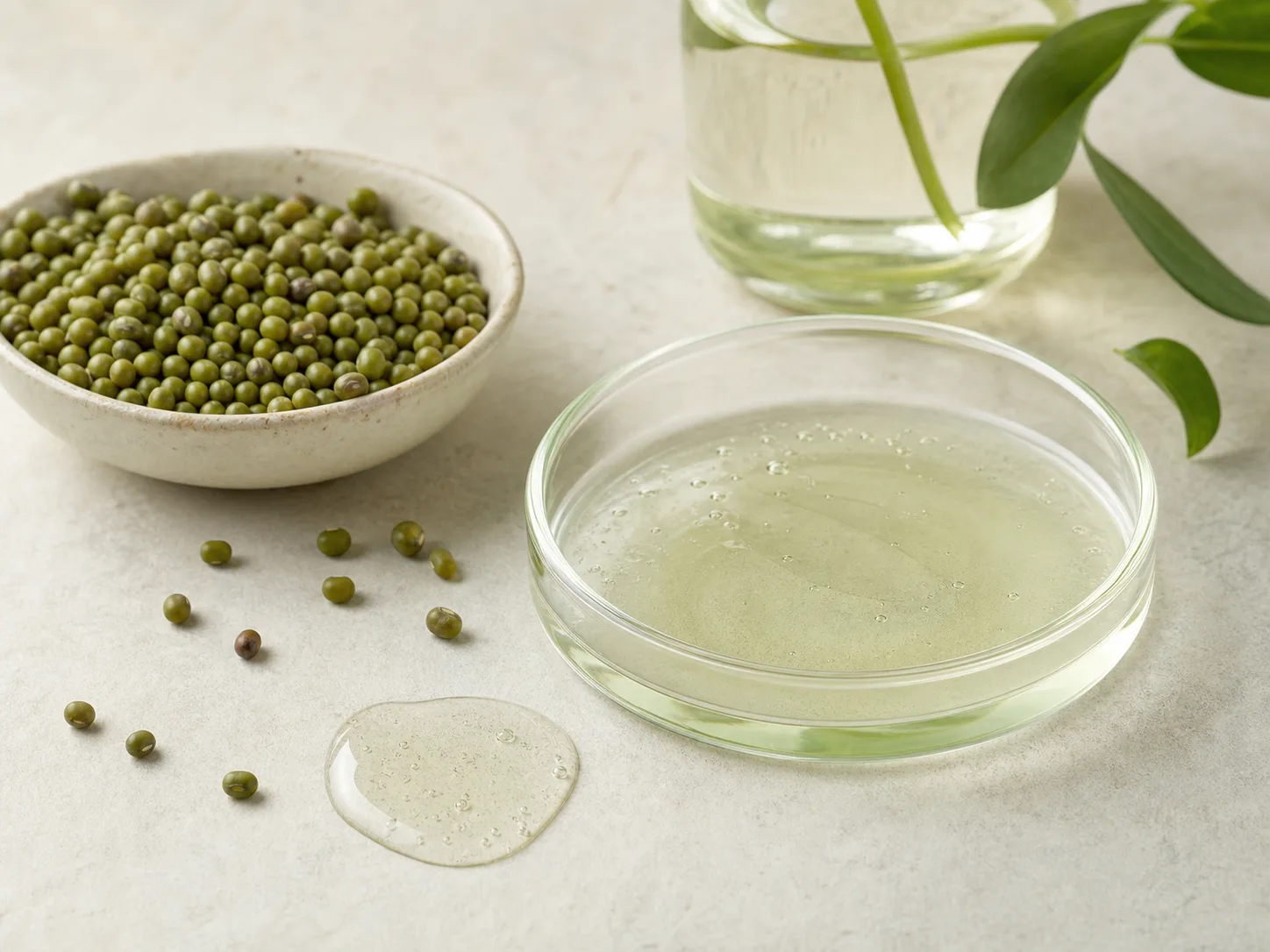
What makes a mung bean cleanser appealing?
The main appeal of a Vigna Radiata Seed Extract cleanser is straightforward: it suits formulas designed to wash skin clean without leaving an aggressively stripped finish. Mung bean seed extract is used as a skin-conditioning ingredient, so its role is to support a softer, more comfortable skin surface after cleansing.
The extract does not create all of the cleansing action. Surfactants do that. A good mung bean cleanser therefore pairs the highlighted extract with a mild cleansing base and water-binding ingredients such as glycerin or betaine rather than relying on the plant name alone.
What can it do for skin?
Start with post-cleanse tightness. If the cheeks and mouth area feel stretched or flaky within minutes of washing, the cleanser may be too strong for the skin. A mild formula containing mung bean extract is meant to leave the surface feeling smoother and less dry rather than squeaky.
Mung beans also contain flavonoids such as vitexin and isovitexin, along with other polyphenols known for antioxidant activity. Laboratory work on mung bean seed and sprout extracts has also found activity related to melanin production. That gives the ingredient a reasonable basis for the healthy-looking, brighter-skin language often used around it.
A cleanser is rinsed away quickly, however, so it works best as a comfortable daily cleansing step with an antioxidant botanical extra, not as the main treatment for uneven tone. For visible dark spots or dullness, sunscreen and a leave-on vitamin C, niacinamide, or another targeted product will do more of the work.
Not every mung bean cleanser is gentle
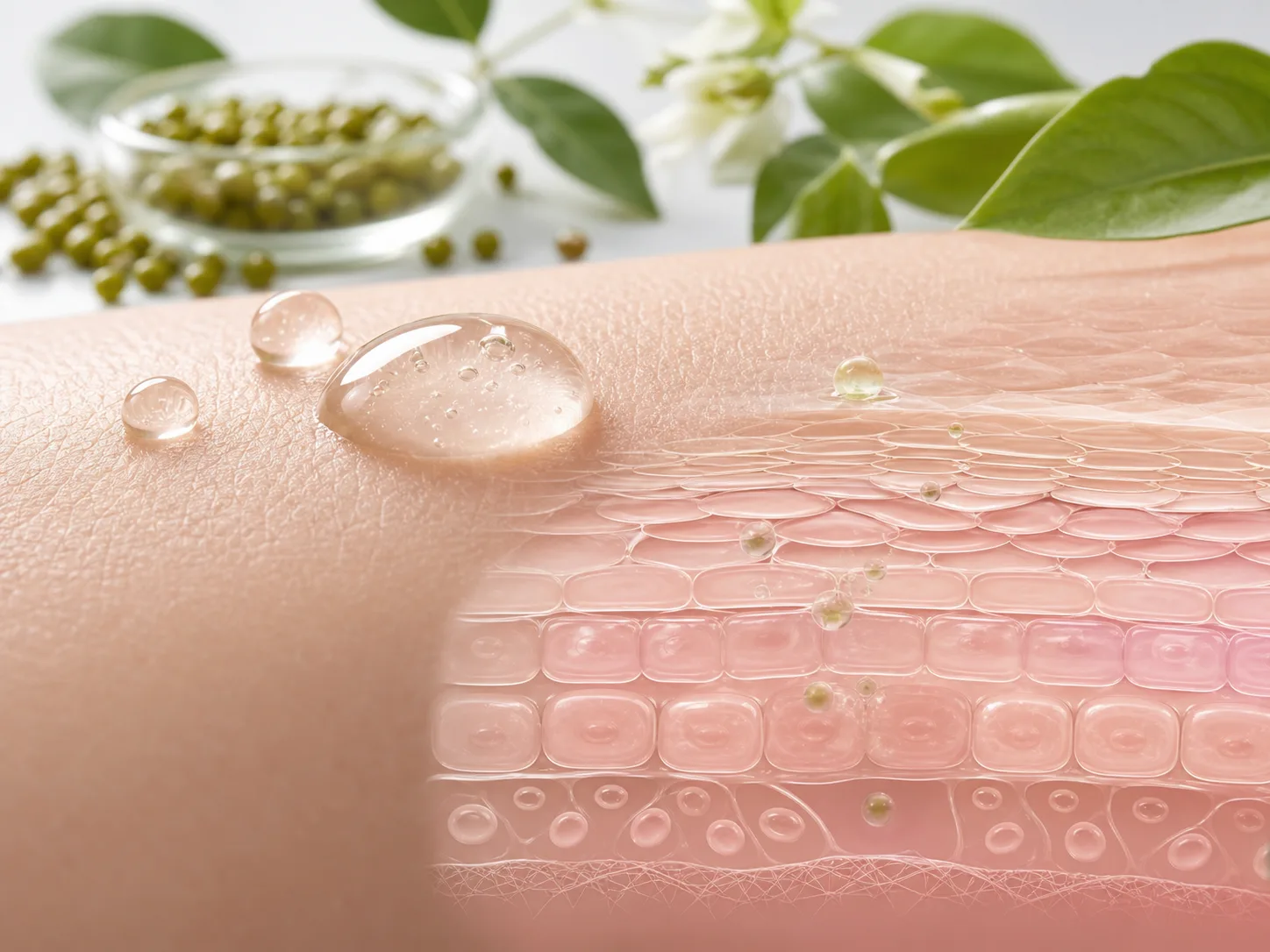
Texture and surfactants still change everything. A high-foam cleanser with strong oil removal may feel fresh on oily skin but tight on dry or sensitive skin. A gel cleanser can feel lighter, yet fragrance or essential oils may still cause stinging.
Look for humectants and comfort-supporting ingredients such as glycerin, betaine, and panthenol alongside the extract. If you dislike a slippery film, choose a light gel or low-foam formula that rinses clean rather than a product loaded with heavy oils or film-forming polymers.
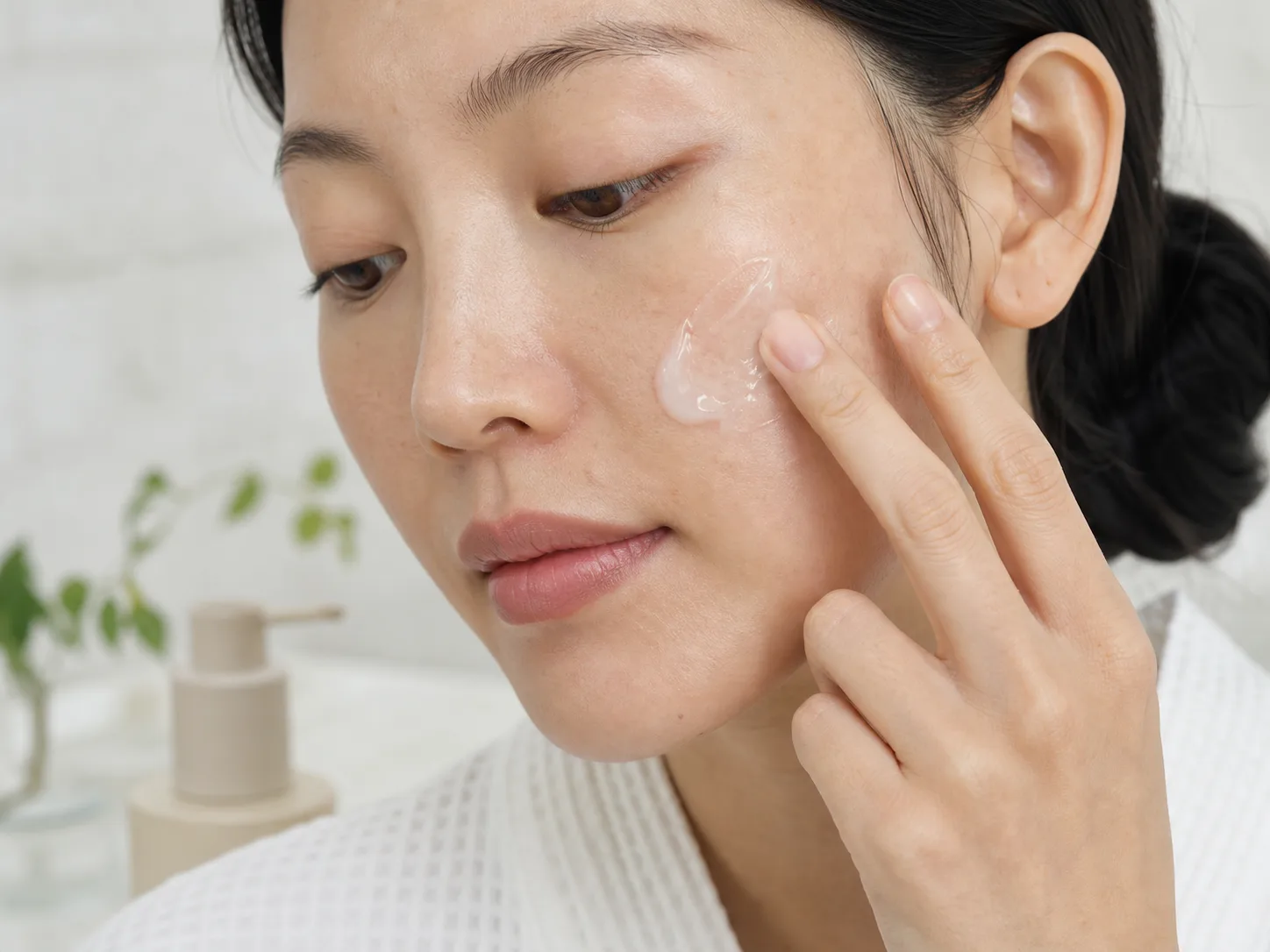
Who may enjoy it?
- Skin that feels tight after cleansing but dislikes rich cream cleansers
- Oily or combination skin that wants freshness without a harsh squeaky finish
- Routines using retinoids or exfoliants that need a gentler cleansing step
- Anyone who prefers a light gel or foam cleanser with botanical conditioning ingredients
If you have had an allergic reaction to legumes, ask a clinician before trying a new mung bean product. Repeated redness or itching may come from fragrance, essential oils, surfactants, or the extract, so check the complete ingredient list rather than assuming the featured ingredient is always the cause.
How to keep cleansing from adding tightness
Wet the face with lukewarm water, lather the cleanser, and massage lightly for about 30 seconds before rinsing. Leaving it on longer will not meaningfully increase the benefits of mung bean extract and may simply increase cleansing time and friction.
On heavy sunscreen or makeup days, use a separate first cleanser and keep the mung bean cleanser brief as the second step. Reduce frequency if the same routine also contains an exfoliating cleanser or scrub.
Sources
- COSMILE Europe ingredient record: https://cosmileeurope.eu/inci/detail/16862/vigna-radiata-seed-extract/
- Mung bean seed and sprout skin-tone study: https://pmc.ncbi.nlm.nih.gov/articles/PMC6049183/
- Review of mung bean composition and antioxidant activity: https://pmc.ncbi.nlm.nih.gov/articles/PMC3899625/
- Japanese cosmetic ingredient record: https://www.cosmetic-info.jp/jcln/detail.php?id=9106
Sources used
- COSMILE Europe Vigna Radiata Seed ExtractIngredient identity, plant part, origin, and skin-conditioning function
- Mung bean seed and sprout extracts on melanogenesisLaboratory evidence on vitexin, tyrosinase activity, and melanogenesis
- Mung bean phytochemistry and biological activities reviewPolyphenols, flavonoids, polysaccharides, and antioxidant activity
- Cosmetic-Info.jp Vigna Radiata Seed ExtractCross-check of cosmetic naming and conditioning functions