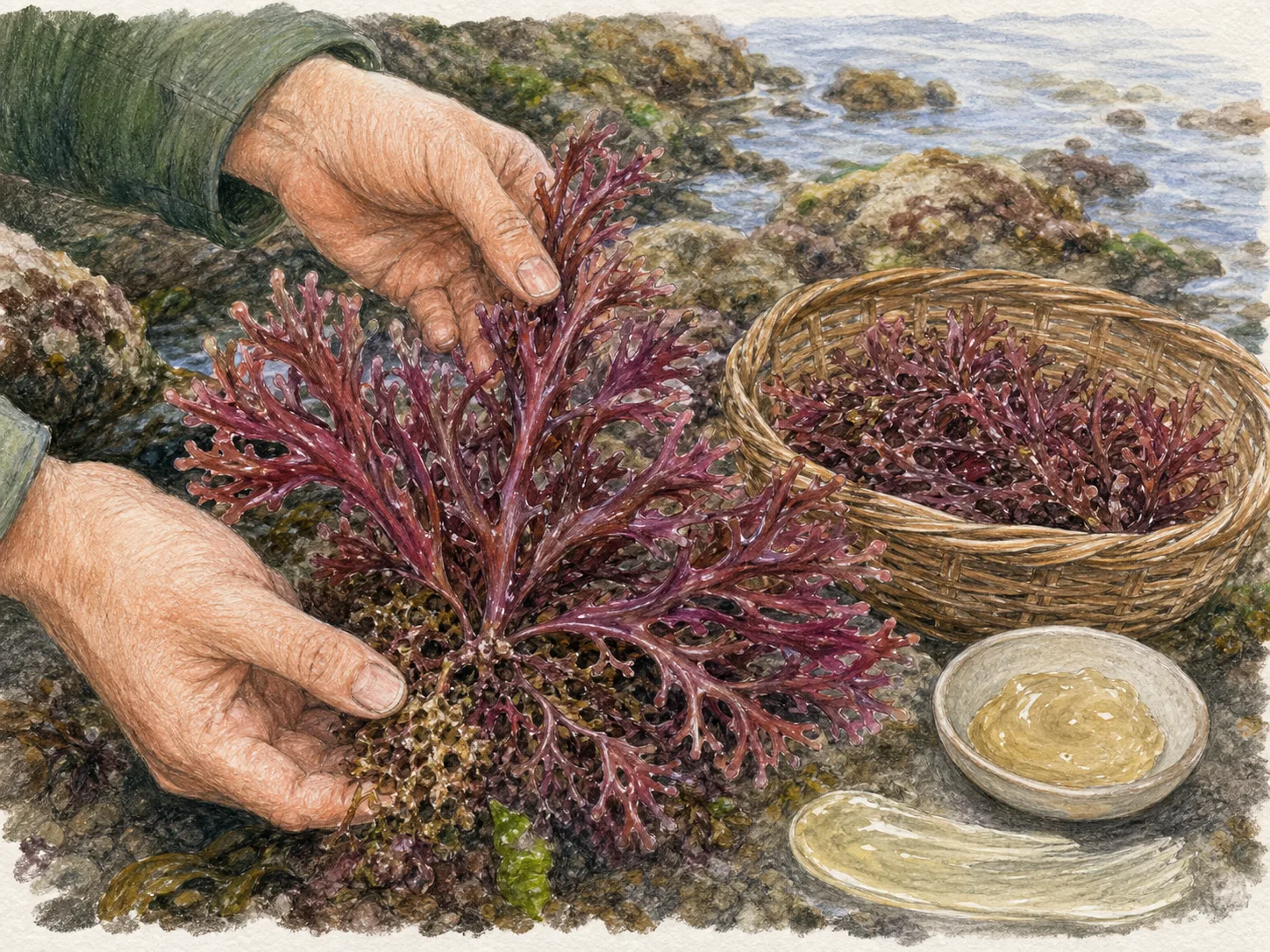
Irish moss is a red algae, not a land moss
Chondrus crispus is a red seaweed that grows along cold North Atlantic coasts. Its cosmetic INCI name, Chondrus Crispus Extract, refers to an extract of the whole algae. Irish moss is the familiar common name, although the organism is not a botanical moss.
The extract contains a mixture of water-loving polysaccharides and other algae-derived compounds. Carrageenan is one important polysaccharide family within that mixture, but the whole extract is not identical to one purified carrageenan grade. It also has no single molecular formula that can represent every batch. That distinction matters when an ingredient page or product description treats a complex seaweed extract as one isolated molecule.
Its most noticeable benefit is a light water-holding film
Carrageenan-rich polysaccharides can bind water and form a thin hydrophilic film across the skin surface. Immediately after application, that film can make rough, dehydrated texture feel smoother and look temporarily plumper. It is a particularly useful effect for someone who wants a fresh layer of hydration without the weight of a rich facial oil.
This is surface hydration, not the same mechanism as replacing missing barrier lipids. Ceramides and other skin lipids help organize the barrier’s oily layers, while Chondrus Crispus Extract mainly contributes a water-rich film and slip. Skin that becomes tight again soon after cleansing may therefore need more than an algae gel alone.
Look for glycerin, betaine, panthenol, or hyaluronic acid to draw and retain additional water. Emollients, squalane, ceramides, and suitable oils can then slow moisture loss and soften dry patches. The supporting system determines whether the initial cushioned feel lasts through the day.
The ingredient also helps build the gel itself
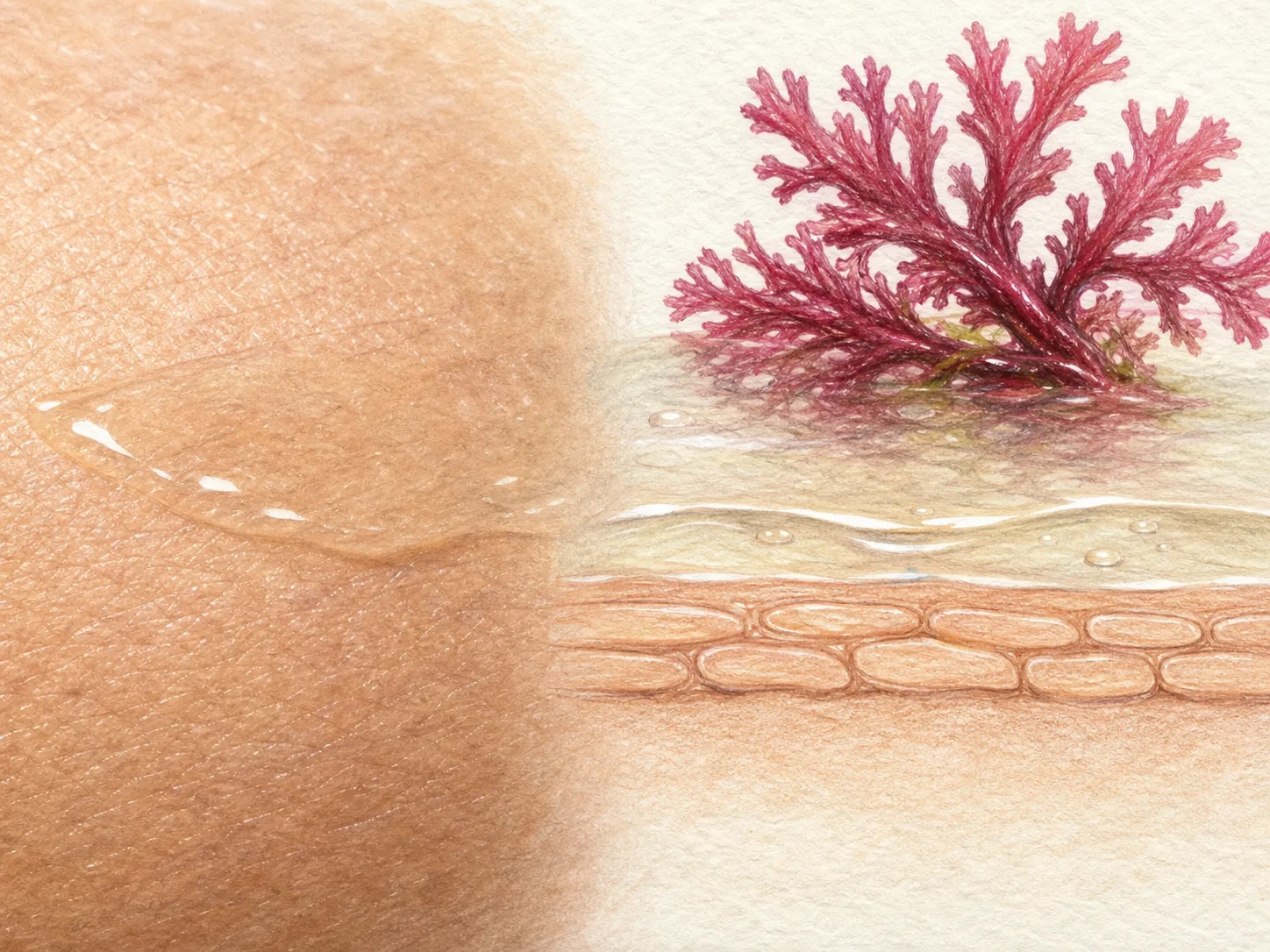
Chondrus Crispus Extract is useful to formulators because the same polysaccharides that hold water can also increase viscosity. They give a watery serum more body, help an essence spread with less drag, and reduce run-off. In a sheet mask or hydrogel-style product, the thicker texture helps keep the mask in contact with skin.
Toner, serum, and mask formats do not feel the same
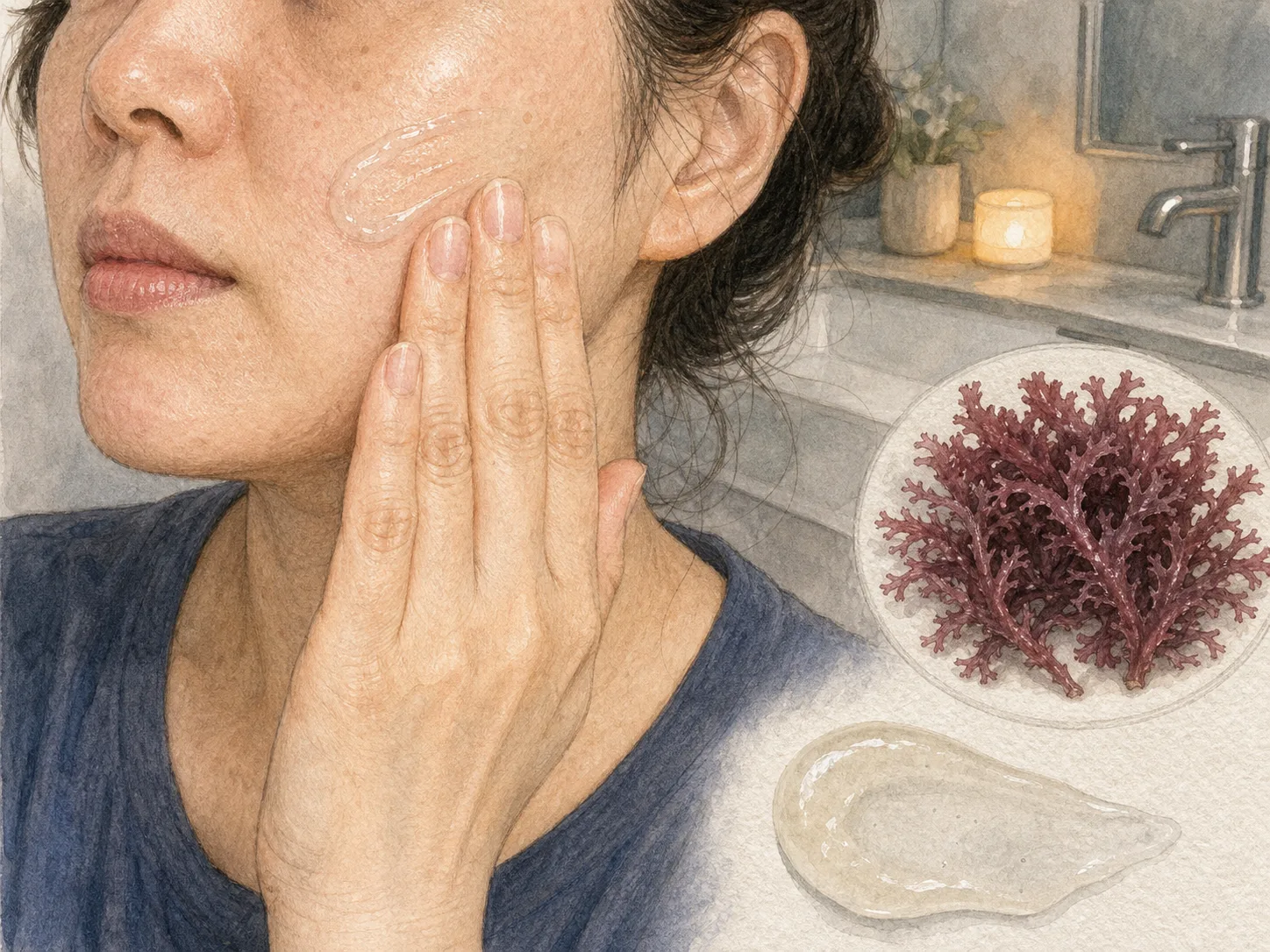
In a fluid toner, a small amount can add softness without turning the product into a noticeable gel. In an ampoule or serum, the same ingredient may be part of a more elastic, adhesive texture. Gel creams use that structure to deliver water with relatively little oil, while masks rely on sustained surface contact and a water-rich formula.
A formula that feels elegant in one layer can pill when several polymer-rich products are rubbed together. If an algae serum rolls into small flakes under sunscreen, use less, spread it in a thin layer, and let the surface settle before pressing on the next step. The problem is often the interaction among film formers, silicones, and application technique rather than evidence that the algae extract is irritating.
What about antioxidant and soothing claims?
Laboratory research on methanolic Chondrus crispus extracts has reported polyphenol content, antioxidant activity, and effects on inflammatory test systems. The researchers were testing compounds beyond the polysaccharides responsible for the gel texture.
The extraction method and test model set an important boundary. A methanol research extract is not necessarily chemically equivalent to the water-based cosmetic material in a toner, and an in-vitro result does not establish a visible soothing, wrinkle, or pigmentation benefit in people. Surface hydration, smoothness, slip, and viscosity are the best-supported reasons to choose this ingredient today.
Carrageenan concerns need the right comparison
Online discussions sometimes combine cosmetic Irish moss extract, food-grade carrageenan, and poligeenan as if they were the same exposure. They are not. The whole algae extract differs from a purified food additive, and poligeenan is a lower-molecular-weight degraded material with different properties. Swallowing a substance and applying a small amount in a cosmetic also create different exposure conditions.
The Cosmetic Ingredient Review assessment of red algae-derived ingredients concluded that they are safe in the present practices of cosmetic use and concentration. That does not mean every finished product suits every person. Repeated itching, burning, or redness is a reason to stop the product and review its complete formula, including fragrance, preservatives, and other active ingredients, rather than diagnosing the cause from the algae name alone.
Who may enjoy it, and who may want more
Dehydrated oily or combination skin can benefit from the extract’s light film, especially in warm weather or under sunscreen. It adds water and glide without automatically bringing the richness of an oil-heavy cream. People who dislike tacky or coated finishes should still test the finished texture, because the amount and combination of gums and polymers determine how much film remains.
Very dry skin may enjoy an Irish moss serum as a first moisturizing layer but still need a cream containing lipids or occlusive emollients. If the serum looks smooth at first and tightness returns an hour later, that is a sign to improve the rest of the moisturizing system rather than simply applying more gel.
Sources used
- 대한화장품협회 성분사전: 아이리쉬모스추출물Ingredient identity, cosmetic function, and safety context.
- COSMILE Europe: Chondrus Crispus ExtractIngredient identity, cosmetic use, and evidence context.
- Safety Assessment of Red Algae-Derived IngredientsIngredient identity, cosmetic use, and evidence context.
- Chemical composition, antioxidant, anti-inflammatory and cytotoxic effects of Chondrus crispusIngredient identity, cosmetic use, and evidence context.
- Chondrus Crispus Extract: Cosmetic Ingredient INCIIngredient identity, cosmetic use, and evidence context.
- INCIDecoder: Chondrus Crispus ExtractIngredient identity, cosmetic use, and evidence context.