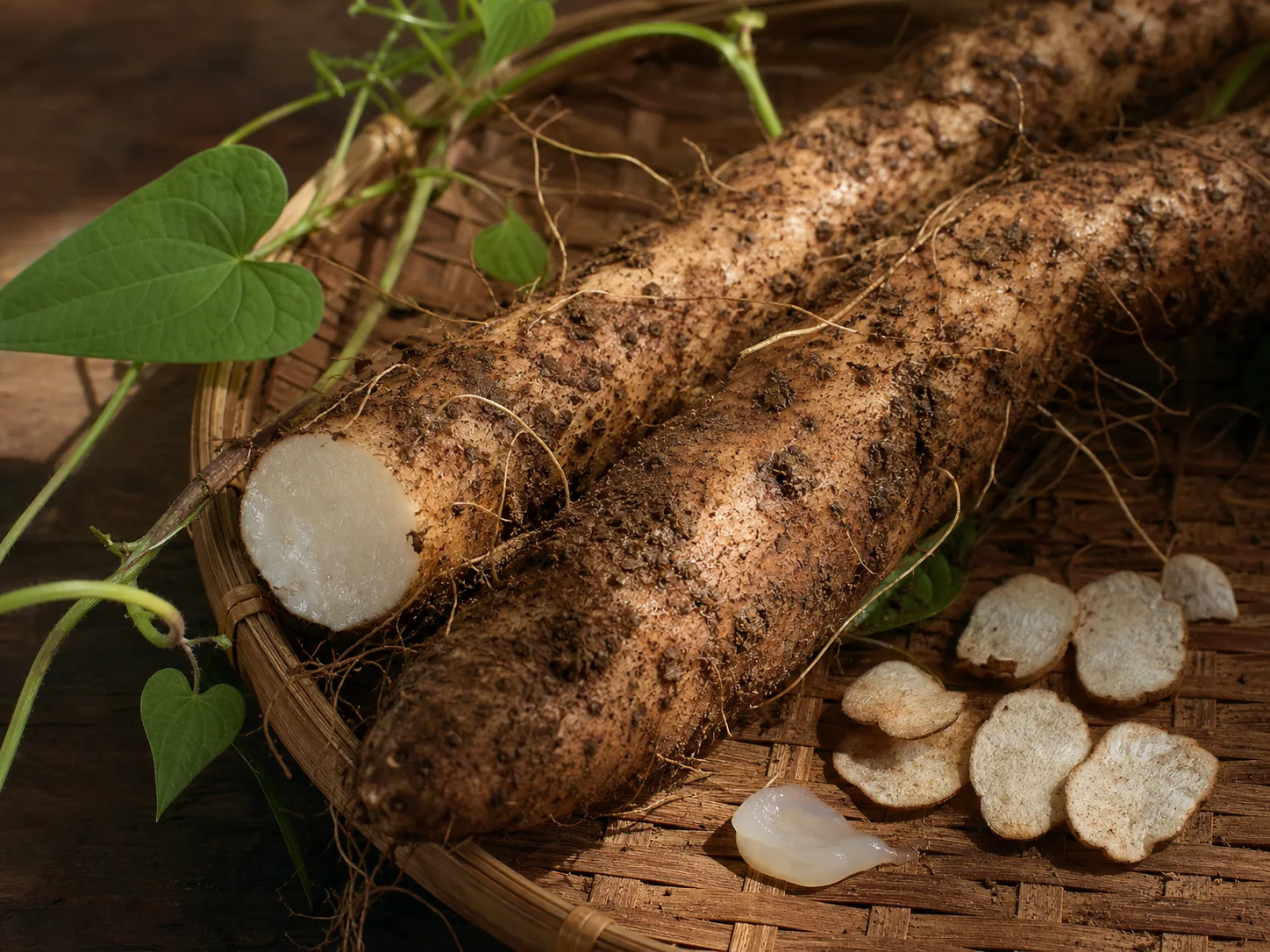
Begin with the exact yam species
Dioscorea Japonica Root Extract is obtained from the root of Dioscorea japonica and is listed for skin conditioning. In practical terms, that function describes support for a softer, more comfortable skin surface within a cosmetic formula.
Several ingredients are easily confused with it. Dioscorea opposita or oppositifolia root extract, Dioscorea villosa wild-yam root extract, and Dioscorea batatas extract come from different species or plant material. Diosgenin is an individual steroidal sapogenin associated with some yam species, not a synonym for the complete root extract. A paper that says only “yam extract” needs a species, plant part, solvent, and preparation before it can inform a claim about this INCI.
Does the slippery raw root explain hydration?
Fresh yam develops a noticeable slippery mucilage when it is cut. That sensory cue has encouraged the idea that every yam cosmetic must form a powerful moisture film. A commercial ingredient, however, has been extracted, filtered, preserved, and supplied to a specification. Its solvent, solids content, and dilution can differ between suppliers. The ingredient list does not reveal whether the raw material was visibly viscous or how much was used.
A Korean cream study prepared formulas with different amounts of yam extract and examined stability and moisturizing-related performance. It provides useful product-development context: yam material can be included in a cream designed for hydration. It does not isolate the extract from glycerin, emulsifiers, oils, and other formula components. A cream that reduces post-cleansing tightness may owe much of that performance to its humectant and lipid system rather than the highlighted plant alone.
What antioxidant and soothing research means
A 2019 study applied a 1% ethanolic rhizome extract to mice with experimentally induced dermatitis for three weeks. Skin thickening and inflammatory-cell infiltration decreased, alongside lower IL-4 and IgE, which are involved in allergic inflammation. This supports investigation of an inflammation-modulating effect; it was not a trial of an ordinary moisturizing serum on people.
Evidence from another Dioscorea species, oral supplementation, isolated diosgenin, or a different plant part should remain supporting context rather than direct proof. Extraction with water can produce a different material from extraction with ethanol, and a laboratory assay answers a different question from a controlled human cosmetic study. In a moisturizer, the extract is used to soften the skin and help it feel comfortable.
How serum and cream formulas change the experience
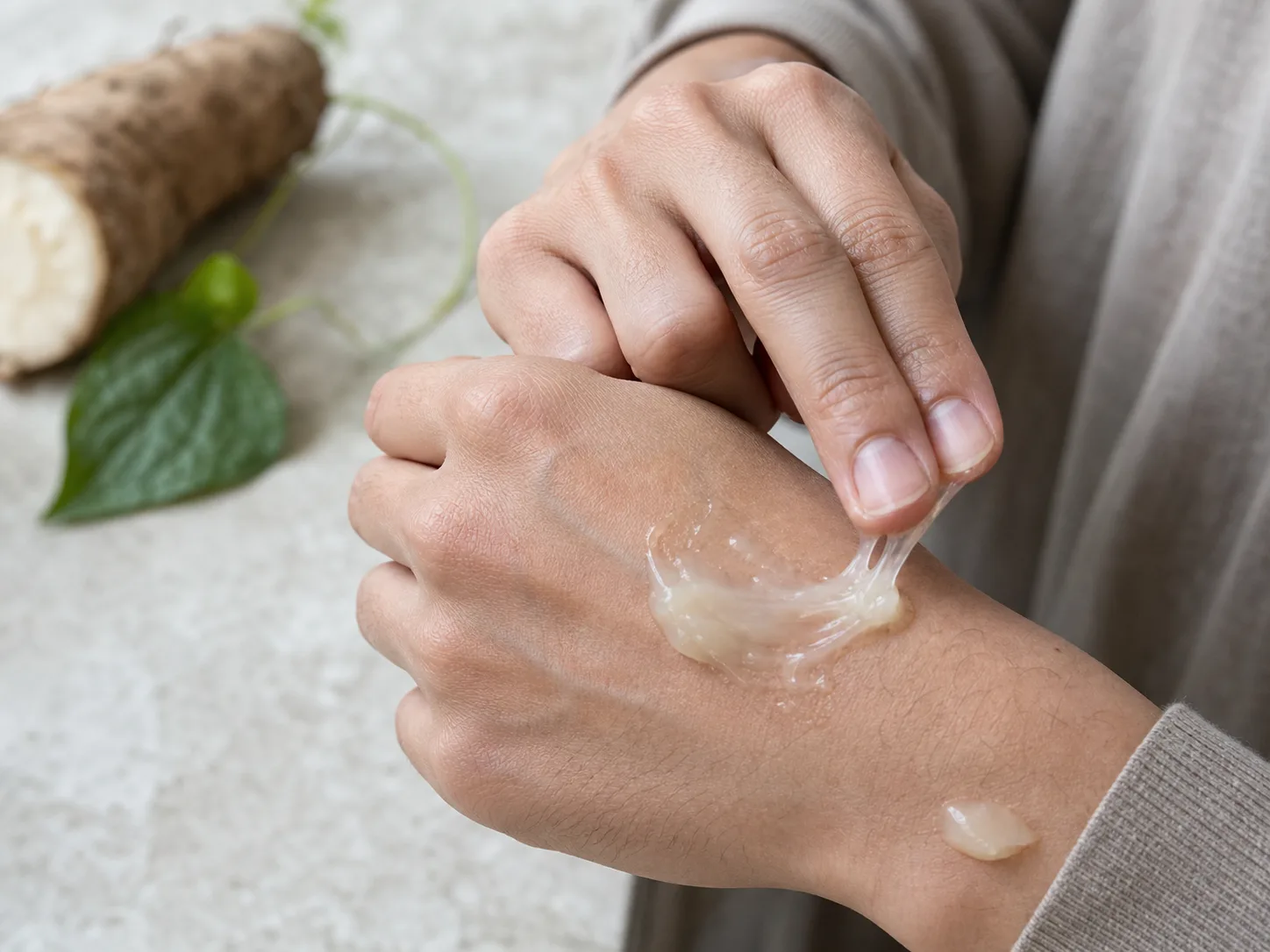
In a watery ampoule or serum, glycerin, glycols, betaine, and hyaluronic-acid ingredients often create most of the immediate water-rich feel. Dioscorea Japonica Root Extract may sit alongside them as a supporting botanical. If your skin becomes oily easily, watch for tackiness and pilling. If it is dry, check whether tightness returns several hours after application rather than judging only the first glossy finish.
Creams depend heavily on lipids and structure. Ceramides, cholesterol, fatty acids, squalane, and emollient oils can make a formula more protective against water loss. A yam-branded cream without enough lipid support may still feel too light for very dry skin. A product containing fragrance and numerous plant extracts may also make a reaction harder to trace. Compare the complete formula and how your skin feels, not only the ingredient featured on the front of the box.
Why a homemade yam mask is a different product
Raw yam sap and plant tissue can be irritating to some people, and contact reactions have been reported with adjacent Dioscorea species. That does not establish that a standardized Dioscorea japonica cosmetic extract has the same risk. It does explain why grating food-grade yam onto the face is less predictable than using a preserved finished formula.
A cosmetic product manages pH, preservation, packaging, stability, and use amount as one system. A homemade mixture has no fixed concentration or microbial shelf life. Anyone with a known yam allergy or itching when handling raw yam should seek individual medical advice before trying a yam cosmetic. Stop if repeated swelling, itching, heat, or redness appears.
A useful introduction routine
Apply a small amount near the jaw or below the ear and wait before using the product across the face. If it remains comfortable, change only that product in the routine for several days. Track post-cleansing tightness, warmth after application, dryness later in the day, and pilling under sunscreen. Those observations are more useful than searching for an overnight transformation.
Use the product according to texture: a watery layer after cleansing, a serum before moisturizer, or a cream near the end of the routine. In the morning, finish with broad-spectrum sunscreen. Avoid introducing a new exfoliating acid or retinoid on the same day so that any stinging is easier to identify. The ingredient does not require a special application technique.
Sources used
- 대한화장품협회 성분사전: 참마뿌리추출물authoritative identity, Korean naming and skin-conditioning function
- 제주 생물종 화장품 원료: Dioscorea Japonica Root ExtractKorean professional identity and cosmetic raw-material context
- DIOSCOREA JAPONICA ROOT EXTRACTinternational identity and skin-conditioning function
- 참마 추출물 크림의 제조 및 피부 보습 효과에 관한 연구finished-cream efficacy and formulation context with confounding limits
- 참마 괴경과 영여자 추출물의 조성과 피부미용 생리활성antioxidant and cosmetic activity context with plant-part limits
- Dioscorea japonica Ethanolic Extract in an Atopic-Dermatitis-like Mouse Modelpreclinical efficacy signal and what the research actually shows